
Proposition 133
Penalties for Human Trafficking of a Minor
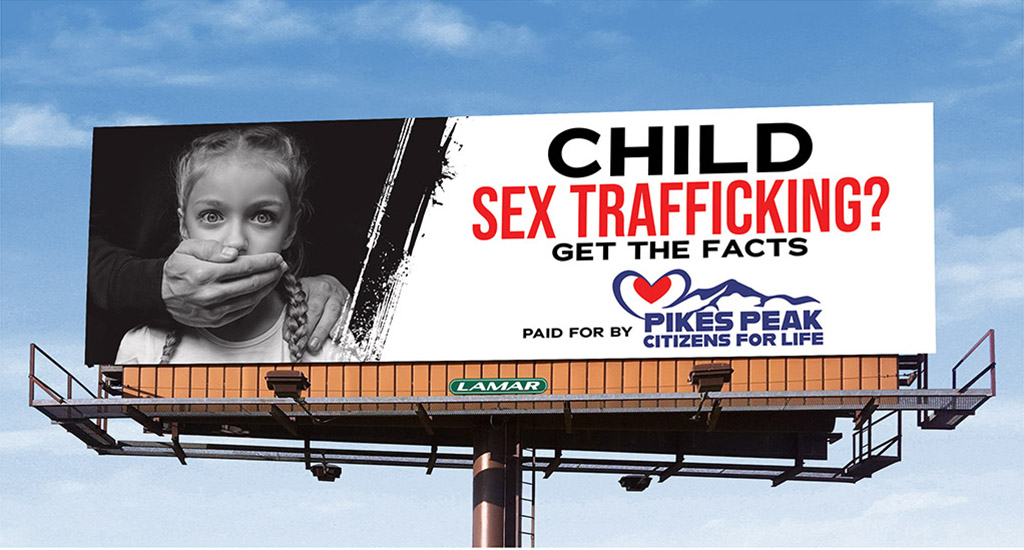
Prop 133 at a Glance
What it is: Colorado Proposition 133 (Initiative #108) is a statewide ballot measure that would increase the penalty for child sex trafficking to life in prison without parole or release. It would also close a gap in Colorado’s human-trafficking law by expanding the offense to include knowingly trading anything of monetary value to buy or sell sexual activity with a minor.
Did You Know? The Colorado Bureau of Investigation cites estimates that children are first sex trafficked at an average age of 11–14 years old.
Are Victims Protected? Colorado law provides legal protections that help shield trafficking victims from punishment, including an affirmative defense for victims who were forced or coerced into engaging in human trafficking. The law targets perpetrators, not victims of trafficking. Proposition 133 retains the existing legal protections for trafficking victims, while increasing the penalty for perpetrators convicted of child sex trafficking to life in prison without parole or release.
Proposition 133 strengthens Colorado’s laws against the trafficking and commercial sexual exploitation of children by requiring life imprisonment without parole or release for perpetrators convicted of child sex trafficking.
Prop 133 protects victims and strengthens penalties for those who exploit children.
Pros
Stronger protection for children — Requires life imprisonment without parole or release for perpetrators convicted of child sex trafficking.
Closes a gap in the law — Expands the law to cover knowingly buying or selling sexual activity with a minor in exchange for anything of monetary value.
Deterrence — Increased penalties for child sex trafficking can deter perpetrators from exploiting and victimizing children and teens.
Prevents convicted offenders from returning to the community — Offenders serving life without parole or release cannot re-offend in the community.
Clear message — Reinforces Colorado’s condemnation of child sex trafficking and exploitation.
Cons
No sentencing flexibility — Life without parole or release does not allow a lesser sentence for a child sex trafficking conviction.
Questions about deterrence — Harsher penalties may be just one piece in trafficking prevention.
Other prevention measures — Preventing trafficking also requires approaches such as stable housing, victim services, and other resources beyond criminal penalties. The measure focuses on strengthening the penalty and does not address other prevention measures.
The Bottom Line
Proposition 133 would increase the penalty for child sex trafficking to life in prison without parole or release. It would also close a gap in Colorado’s human-trafficking law by covering both the buying and selling of sexual activity with a minor in exchange for anything of monetary value.
What the Colorado Catholic Conference Says
“It is imperative that Coloradans strengthen laws that reject the modern slavery of sex trafficking of children.”
Colorado Catholic Conference, Bishops’ Letter on Proposition 133
Read the full Colorado Bishops’ statement on Propositions 133, 134 & 135
Prop 133 FAQ
What is Colorado Proposition 133?
Proposition 133 is a 2026 Colorado statewide ballot initiative (Initiative #108), called the “Children Are Not for Sale Act” by its proponents. It would increase the penalty for child sex trafficking to life in prison without parole or release. It would also close a gap in Colorado’s human-trafficking law by expanding the offense to include paying for sexual activity with a minor in exchange for anything of monetary value.
What does a Yes vote on Prop 133 mean?
A Yes vote supports enacting the measure, which would strengthen Colorado’s laws against the trafficking and commercial sexual exploitation of children by closing a gap in the law to include the exchange of anything of monetary value to buy or sell sexual activity with a minor and increasing the penalty to life in prison without parole or release.
What does a No vote on Prop 133 mean?
A No vote means the measure is not enacted and current Colorado law stays in place, which allows convicted child sex traffickers to receive as little as 8 years in prison, plus a mandatory parole period.
Who supports 133?
More than 150,000 Colorado voters signed the petition to place Proposition 133 on the ballot. Hundreds of Christian churches across Colorado and the Colorado Catholic Conference support the measure.
The Human Trafficking Task Force of Southern Colorado and victim-service organization All Things Possible Ministries also support Proposition 133.
This list is not exhaustive.
Who opposes Proposition 133?
Cobalt Advocates, a pro-abortion organization whose affiliated Cobalt Abortion Fund directly pays for abortion, and COLOR Action Fund oppose Proposition 133.
This list is not exhaustive.
Ballot Measure Language (click to expand)
CDOS Received: July 25, 2025 12:44 P.M. CH — 2025-2026 #108 – Final Text
2025-2026 #108 Penalties for human trafficking of a minor FINAL
Be it enacted by the people of the State of Colorado
SECTION 1. Legislative Declaration. (1) The people of the State of Colorado hereby find and declare:
(a) Residents of Colorado and other states and territories throughout the United States have seen an alarming increase in human trafficking, especially human trafficking involving minor children;
(b) Current penalties in Colorado law with parole possible in as little as eight years have failed to adequately deter the human trafficking of minor children; and
(c) It is the measure of a fair and compassionate society to ensure that children are not for sale.
SECTION 2. In Colorado Revised Statutes, 18-3-504, amend (2)(a) and (2)(b); and add (5) and (6) as follows:
18-3-504. Human trafficking for sexual servitude – human trafficking of a minor for sexual servitude.
(2) (a) A person commits human trafficking of a minor for sexual servitude if the person:
(I) Knowingly sells, recruits, harbors, transports, transfers, isolates, entices, provides, receives, obtains by any means, maintains, or makes available a minor for the purpose of commercial sexual activity; or
(II) Knowingly advertises, offers to sell, or sells travel services that facilitate an activity prohibited pursuant to subsection (2)(a)(I) of this section; OR
(III) KNOWINGLY TRADES ANYTHING OF MONETARY VALUE TO BUY OR SELL SEXUAL ACTIVITY WITH A MINOR.
(b) Human trafficking of a minor for sexual servitude is a class 2 1 felony. The court shall sentence a person convicted of such a class 2 1 felony to the department of corrections for a term of at least the minimum of the presumptive range for a class 2 felony, LIFE IN PRISON WITHOUT PAROLE OR RELEASE, as set forth in section 18-1.3-401.
(5) NOTHING IN THIS SECTION SHALL LIMIT A GOVERNOR’S STANDING AUTHORITY OF PARDON, COMMUTATION, OR CLEMENCY.
(6) THE SHORT TITLE OF THIS SECTION IS THE “CHILDREN ARE NOT FOR SALE ACT.”
SECTION 3. Effective date — applicability. This act takes effect on January 1, 2027, and applies to offenses committed on or after that date.
Read the pros and cons above and the full ballot language to decide for yourself.
Election Day: Tuesday, November 3, 2026, Colorado General Election.
Analysis prepared by Trevor Malloy, Board Director for Policy and Advocacy, Pikes Peak Citizens for Life.